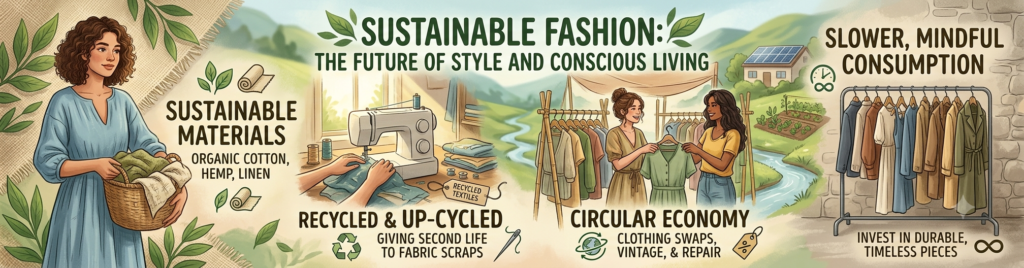
Sustainable Fashion: The Future of Style and Conscious Living
Introduction Fashion is more than just clothing; it is a way of expressing personality, creativity, and confidence. Every year, new trends emerge, inspiring people to experiment with different styles and looks. However, the fashion industry has also become one of the largest contributors to environmental pollution due to excessive production, waste, and resource consumption. As awareness about climate change and environmental conservation grows, people are beginning to embrace a more responsible approach to fashion. This shift has given rise to sustainable fashion, a movement that encourages consumers to make environmentally friendly and ethical choices without compromising on style. Sustainable fashion is not just a passing trend—it represents a long-term commitment to protecting the planet while supporting fair labor practices and reducing waste. From eco-friendly fabrics to ethical manufacturing processes, sustainable fashion is changing the way people think about their wardrobes. It proves that looking fashionable and caring for the environment can go hand in hand. What Is Sustainable Fashion? Sustainable fashion refers to clothing, footwear, and accessories that are designed, produced, and consumed in ways that minimize their impact on the environment and society. Unlike fast fashion, which focuses on producing large quantities of inexpensive clothing in a short period, sustainable fashion emphasizes quality, durability, and ethical production. This approach includes using organic materials, recycled fabrics, eco-friendly dyes, and responsible manufacturing practices. It also encourages consumers to buy fewer but better-quality items, repair damaged clothing, recycle old garments, and support brands that value transparency and fair working conditions. The goal of sustainable fashion is to create a positive impact on both people and the planet while maintaining modern style and comfort. Why Sustainable Fashion Matters The fashion industry consumes massive amounts of water, energy, and raw materials every year. Millions of garments are produced, but many are discarded after only a few uses, leading to overflowing landfills and increased pollution. Synthetic fabrics like polyester also release microplastics into rivers and oceans whenever they are washed. By choosing sustainable fashion, consumers help reduce waste, lower carbon emissions, and conserve natural resources. Ethical fashion brands also ensure that workers receive fair wages, safe working environments, and reasonable working hours. Supporting sustainable fashion means making thoughtful purchasing decisions that benefit both current and future generations. The Problem with Fast Fashion Fast fashion has transformed the clothing industry by making trendy outfits affordable and widely available. While this offers convenience, it also encourages overconsumption. Many people buy clothes simply because they are inexpensive, wear them only a few times, and then throw them away. The rapid production process often relies on cheap labor, poor working conditions, and low-quality materials. Factories may use harmful chemicals during manufacturing, which pollute nearby water sources and damage ecosystems. As trends change quickly, consumers feel pressured to constantly update their wardrobes, creating unnecessary waste and increasing demand for more production. This cycle has significant environmental and social consequences. Eco-Friendly Fabrics Transforming Fashion One of the biggest innovations in sustainable fashion is the use of environmentally friendly fabrics. These materials require fewer natural resources and have a lower environmental impact compared to conventional textiles. Organic cotton is grown without harmful pesticides and synthetic fertilizers, making it safer for both farmers and the environment. Bamboo fabric is naturally breathable, biodegradable, and grows rapidly without requiring excessive water. Linen, made from flax plants, is durable and uses fewer resources during cultivation. Recycled polyester, created from discarded plastic bottles and other recycled materials, helps reduce plastic waste while giving new life to existing resources. Hemp is another sustainable fabric known for its strength, durability, and minimal environmental footprint. Choosing garments made from these fabrics supports a cleaner and more responsible fashion industry. Building a Sustainable Wardrobe Creating a sustainable wardrobe does not require replacing every piece of clothing at once. Instead, it involves making smarter purchasing decisions over time. Investing in timeless wardrobe essentials such as classic jeans, white shirts, black dresses, neutral blazers, and comfortable footwear allows people to create multiple outfits without constantly buying new clothes. High-quality garments may cost more initially, but they often last much longer, making them more economical in the long run. Taking proper care of clothing also extends its lifespan. Washing garments with cold water, avoiding unnecessary drying, repairing minor damages, and storing clothes correctly all contribute to reducing waste. Donating, selling, or recycling unwanted clothing instead of throwing it away is another effective way to promote sustainability. Fashion Trends That Support Sustainability Many current fashion trends naturally align with sustainable living. Minimalist fashion focuses on simple designs, neutral colors, and versatile clothing pieces that never go out of style. Capsule wardrobes encourage owning fewer, carefully selected garments that can be mixed and matched for different occasions. Vintage and thrift shopping have also become increasingly popular. Purchasing second-hand clothing reduces demand for new production while allowing consumers to discover unique and affordable fashion items. Another growing trend is clothing rental services, especially for weddings, parties, and formal events. Renting expensive outfits instead of purchasing them for one-time use significantly reduces textile waste. Upcycling has also gained popularity, with designers transforming old garments into stylish new creations rather than discarding them. The Role of Technology in Sustainable Fashion Technology is playing an important role in making fashion more sustainable. Many brands now use advanced manufacturing techniques that reduce fabric waste during production. Artificial intelligence helps companies predict customer demand more accurately, preventing overproduction. Digital fashion design allows designers to create virtual samples before producing physical garments, saving materials and reducing unnecessary waste. Some companies are even developing biodegradable textiles and innovative plant-based leather alternatives made from mushrooms, pineapple leaves, cactus, and apple waste. Blockchain technology is also improving supply chain transparency by allowing consumers to track where and how their clothing was produced. These innovations are helping the fashion industry become more environmentally responsible while maintaining creativity and quality. Tips for Shopping Sustainably Consumers have the power to make a significant difference through everyday shopping habits. Before purchasing a new item, it is helpful to